'Out of Darkness Cometh Light: The story of Wolves' home kit' by club historian, Pete Crump
The famous gold and black is now iconic across the footballing world, and we mark the start of our 150th campaign by looking at how our strip has developed during the past 150 years.
This is part 3 of the series on Wolves’ home kit history. To read part 1, focusing on how the club’s home kit changed between 1877 and 1930, please click here, and for part 2, reflecting on the 1930s to 1960s, click here.
Admiral: The Pioneers
The 1970s saw a huge change in football shirts and Admiral were the fore runners in this as they came out with the first ever replica shirt at Leeds United in 1973. A simple idea of how the shirt could also be worn by the supporters, which has now created a huge market and one of the biggest revenue streams at any football club.
Some may remember the first so-called club shop opened at Wolves in November 1968. It was managed by Harvey Andrews with help from his wife Yvonne. The shop, however, was nothing like it is today. It was a hut or wooden building, as it was described in the programme, and was located at the rear of the North Bank by the car park.
It would have had rosettes, scarfs, badges, programmes and some books on sale. There would not be a choice of all the shirts, training gear and everything else that we have now. The club shop, even when I came to Molineux for the first time in 1991, had by then been upgraded to a portacabin. It was only in 1992 when the first ‘Megastore’ opened in the new Stan Cullis Stand.
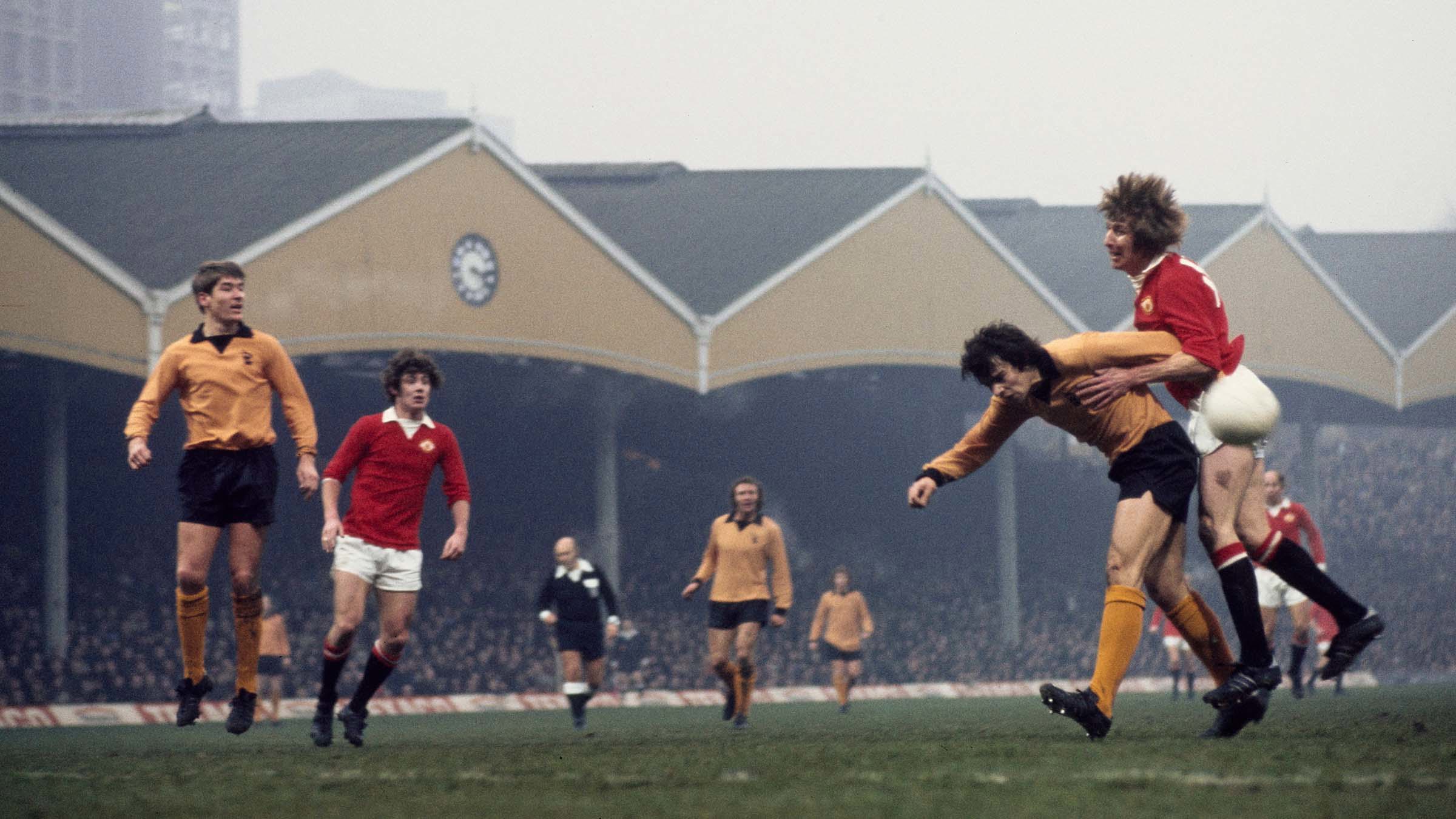
Gradually during the late 1970s and 1980s, replica shirts started to be seen being worn by supporters. By the late 1980s and into the 1990s it was becoming big business. Still to this day, kit launch day is huge for many supporters. The wait and anticipation for the new kit is exciting and one of the biggest days in the calendar. Many supporters are keen to ensure their shirt collections are kept up to date and now there are three shirts and even three keeper tops to choose from.
Back to the 1970s
Back to our shirt in the 1970s, and the black shorts and gold socks were consistent. Gold shorts were merely worn away from home and this was at places such as Derby County, Sunderland, Sheffield United, Newcastle United, among others. There has been occasions we have also worn them at the Hawthorns too. This was so that Wolves’ black shorts did not clash with black or darker shorts of the home team.
Quite often in this era, however, the gold shorts didn’t quite match the shirt. Look at Wolves playing at Bolton Wanderers in May 1977 as we won the Second Division. The away shirt – or change shirt in those days – was only worn if required. The gold shorts have remained in place for changes away from home. It was nostalgic to see it return quite regularly in 2024/25 and we wore them quite a lot under Vitor Periera, most memorably in his opening game at Leicester City.
In 1979, we saw a huge change to the Wolves shirt as the wolf head badge as we know it today appears for the first time on Saturday 17th November 1979 in our 3-0 home defeat to Coventry City, although the wolf head that was present on the kit that day had been seen on jumpers and letterheads prior to this.
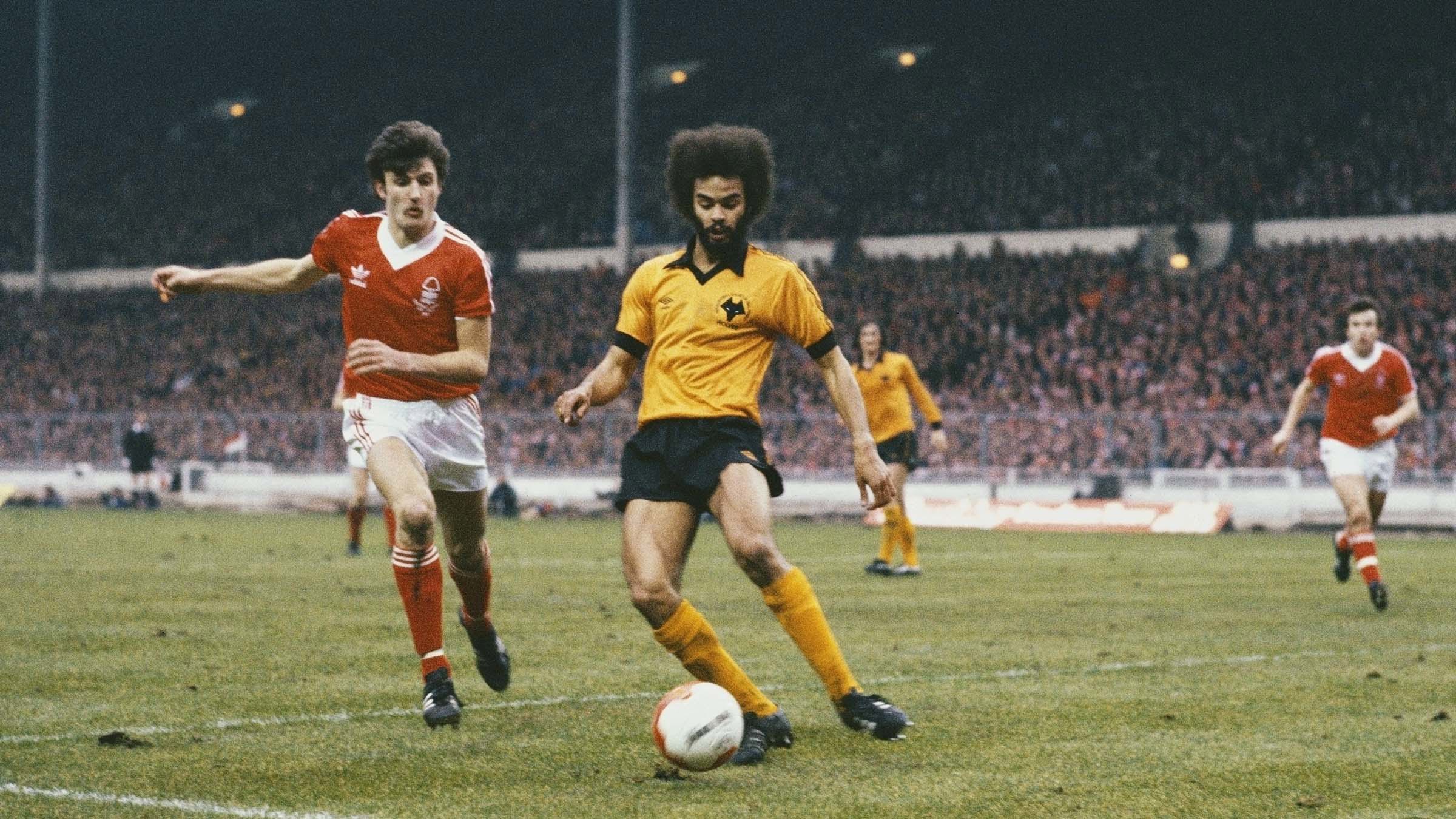
The 1979 to 1982 Wolves shirt again is simple, striking and iconic, and the vast majority of Wolves supporters still love it. This is the shirt that was worn at Wembley in 1980 at the League Cup final. I recently wore mine at Burnley away in the heatwave and I saw others with it on too.
Pin stripes, hooped socks and sponsors
In 1982, we see a change to the shirt as Wolves began to wear pin stripes. The iconic shirt would also see a new edition on Saturday 16th October 1982 – a first ever sponsor, with Tatung appearing on the front of shirt. And guess what? We lost 3-0 to Leicester at Molineux like that Coventry game in 1979.
Wolves were not the first club to have a sponsor. Infamously, it was Kettering Town in 1976 to which Derek Dougan was heavily involved. By 1982, The Doog was the managing director here at Wolves following the Bhatti Brothers takeover. In the Football League, however, Liverpool (Hitachi), Everton (Hafnia) and Coventry City (Talbot) were a few examples of clubs that predated us. Derby also had Saab, but we believe only for a pre-season photo shoot in the summer of 1978.
During the 1982/83 season, Tatung would remain on the shirt for the remainder of the campaign, however, Wolves did have to wear the shirt without the sponsor if they were being recorded for Match of The Day or the Big Match due to issues with shirt sponsors being shown on TV.
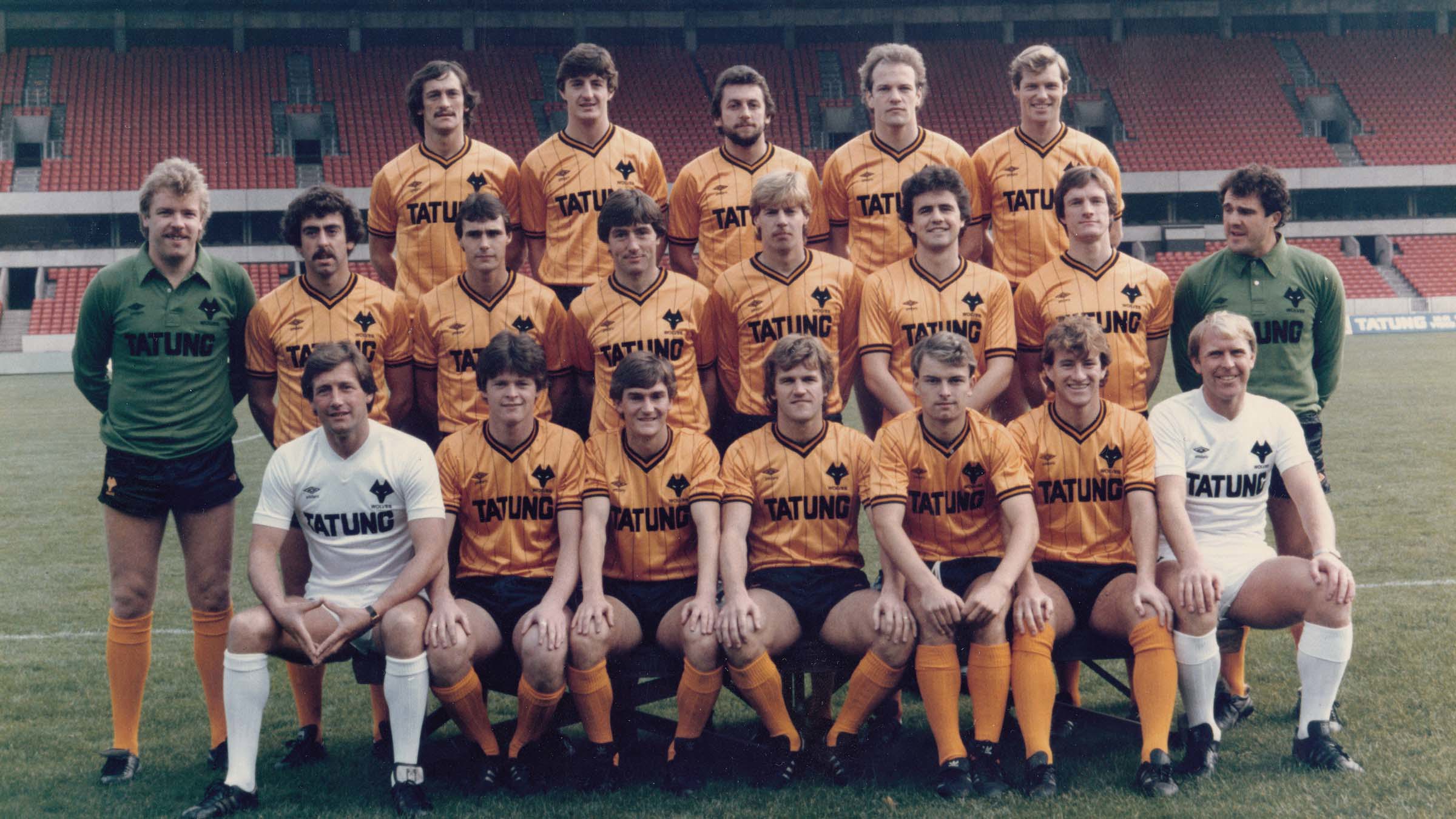
But by the 1983/84 season, shirt sponsors were fine to wear on TV and by 1987, all clubs had a sponsor. Tatung were a Taiwanese electronics company, but they did have a factory in Bridgnorth. My uncle Pete was then the club secretary and he went to see them on a few occasions.
This season also saw a subtle change to the kit, with the hooped socks returning for the first time in just over 30 years. Hooped socks have been worn in our most successful era and, sadly, in one of our worst and most worrying periods. Wolves plummeted down the leagues from 1984 to 1986 wearing the Umbro pin striped shirt and hooped socks.
Tatung would also be gone by the start of the 1985/86 season, and the shirt returned to how it looked at the start of 1982/83. The iconic pin stripe would see Benjamin Perry as sponsor for the last 16 games of the 1985/86 season, while the plain Umbro pin stripe would also be worn during 1986/87, however, there was a change in November. It is highly likely the shirt at the start of 1986/87 was worn out of contract, and we merely wore it as we had not got anything else.
At the back end of the 1985/86 season, a new shirt deal was signed with Olympus Sport, although it appeared this deal was merely lost to history due to the change at Wolves in summer 1986. Wolves changed from 1982 Ltd to 1986 Ltd and we only just survived in 1986 – that’s for sure, and the deal would have been signed under the previous legal entity.
Although the Umbro pin striped shirts were worn in an era where Wolves struggled badly in the main – with the exception of the promotion in 1982/83 – they are still iconic and a popular shirt that supporters wear, while the white away shirt that was worn from 1983 to 1986 is also popular and can be seen a lot in the stands today.
Some of you might remember Logan Breakwell, who is now 12 and has appeared in our Museum newsletter, and over the past two years has been attending our Wolves History Talks at Wolves Museum with his dad, Adrian. On every occasion, he has arrived wearing an original shirt from the 1980s which belonged to his dad. It was great to see young Logan at West Ham this year where he was wearing the white away from 1983 to 1986. It was on show at one point in the Wetherspoons in West India Quay and the condition of it was unreal. I find it hard to believe his dad ever played football in it!
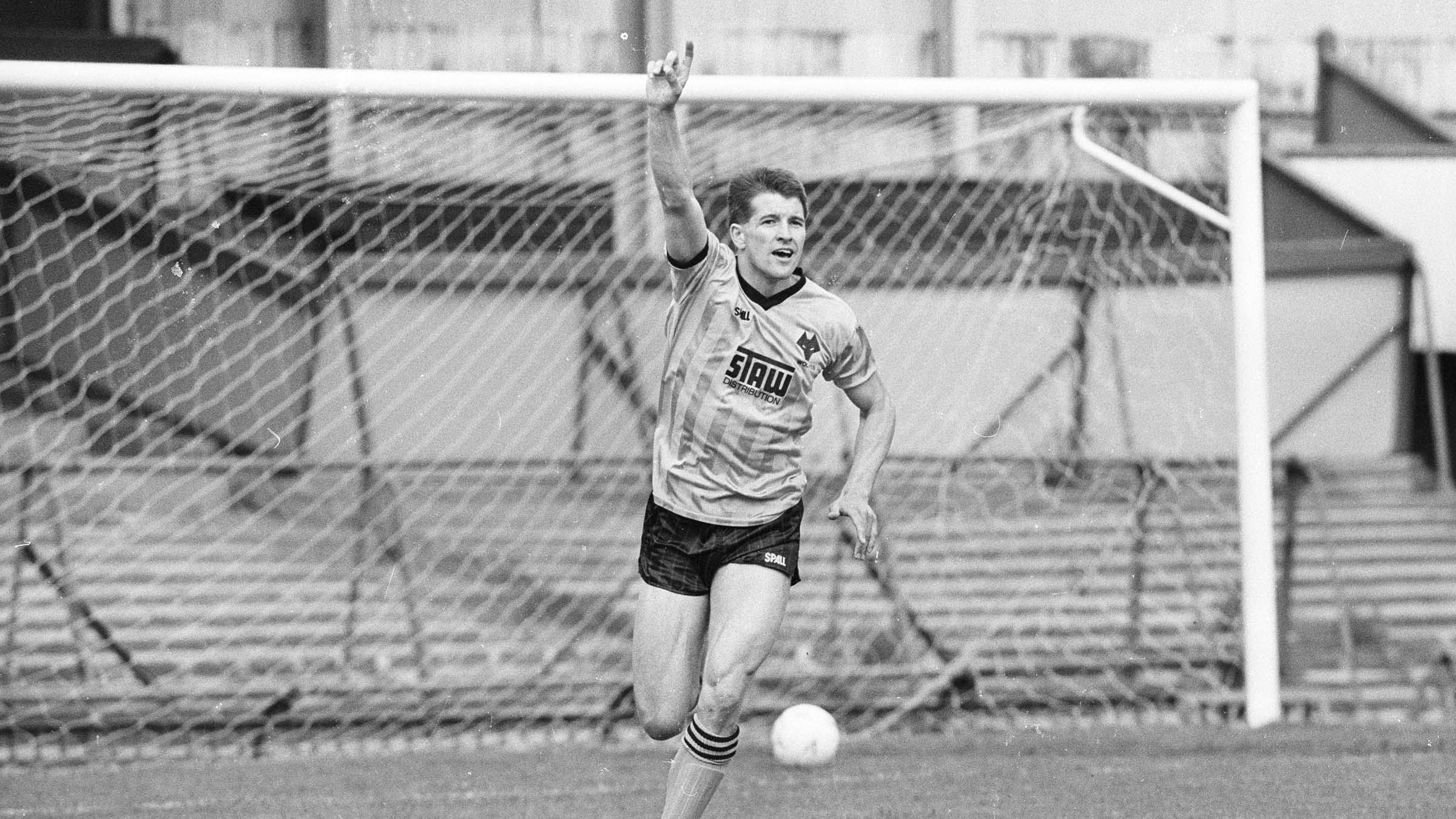
On Saturday 4th November 1986, Wolves ran out for the first time in their new Spall kit, sponsored by Telford-based Staw Distribution. Brian Little, who had been Wolves manager at the start of the season, and Graham Turner, who took over in October 1986, had both made comments about how Wolves needed to look more professional and this was why Spall came on board.
This again would become another plain and excellent design. It is – for me – a no-nonsense Wolves shirt and it would become iconic. It would be the shirt worn at the Sherpa Van Trophy final and when we became Division 4 champions. The shirt, however, would last a little over 18 months, but has become iconic in the years since.
We’ll round off the story of our home shirt next week as we focus on how the kit has changed from the late 1980s to the current day.
Wolves historian Pete Crump’s weekly articles reflecting on a range of topics from the club’s proud past will be available throughout the 150th anniversary season on wolves.co.uk.


