It is a truth often spoken in football that goalkeepers are considered a little bit eccentric. Maybe even a tad crazy. Certainly, one of a kind.
Perhaps that is a natural consequence of occupying such an isolated position. Out on their own, away from their teammates, every action delivered under intense pressure and unforgivable scrutiny. The pressure of knowing that, unlike outfield players, a mistake often automatically leads to the concession of a goal.
That takes a big character. A big personality. That takes someone like Phil Parkes. The great Phil Parkes. Who has now sadly passed away at the age of 79.
The Wolves family truly lost one of its finest this morning with the death of a former goalkeeper and forever personality always so affectionately known as ‘Lofty’.
And not just because of the football.
Yes, he was a top goalkeeper spending over a decade in the first team at Molineux. An imposing figure, a powerful presence, who would never shy away from a confrontation. He made the odd mistake. Which goalkeeper doesn’t? But he always kept going, kept giving his all, and never let the ups and downs of a career at the top level unduly bother him. Parkes faced his challenges head-on. He never hid.
It has been since his career finished that Parkes also cemented his unquestionable status as one of Wolves’ most popular former players.
He played cricket for Fordhouses for many years, working as a roofer for over two decades for the cricket club’s chairman. He also enjoyed several coaching and assistant manager roles in non-league football with pals and former teammates such as Steve Daley and Mel Eves.
He stayed in very close touch with so many of his former teammates and, for many years, all the way through to his passing, sat on the committee of Wolves’ Former Players Association.
And he has always stayed, right to his core, a family man of strong loyalty and principle.
Parkes’ wife Maureen passed away from cancer in 2010. She had already raised thousands for New Cross Hospital following a previous diagnosis and, with the support of family friend Sheila Edwards, that was a level of fundraising that was continued in her memory. And as a result, so much more vital equipment was purchased for the Royal Wolverhampton NHS Trust from funds raised in tribute to Maureen. And Lofty, through his broken heart, with the support of sons Greg and Dean, remained the driving force.
Charity work and community life remained an integral part of Parkes’ life. He often lived by a regular routine, a Greggs for breakfast, bus into the city, meeting friends and family for a pint.

He was also one of the most well-known former players in meeting fans and in supporting events. Not long before he suffered the fall in April of last year which left him unable to walk and began a gradual decline in health, Parkes had been at Wolves’ Museum, meeting fans as part of a Wolves Wish. A few weeks earlier he had joined Daley and club legend Steve Bull in visiting a local care home to wish one of the residents a happy hundredth birthday. A wonderful hour, filled with smiles and laughter. He stayed very close to the club and would regularly pop in to chat to staff in the museum.
Parkes’ open and engaging personality would make him a focal point of such gatherings. Always with time for people, spreading good cheer. And that was also the case back in his playing career, as one of the livelier and cherished members of the Wolves dressing room.
It could, of course, all have been very different. Parkes was born in West Bromwich, and, in a different world, could have ended up playing for Wolves’ local rivals.
He grew up taking in games at the Hawthorns, watching players such as Ronnie Allen - later his manager at Wolves - Derek Kevan and Ray Barlow.
He did go and train with Albion’s youth system one Monday night, but didn’t enjoy it, and it wasn’t until he was 14, and spotted by a Wolves scout, that his potential gathered pace.
Being coached by Wolves favourites such as Bill Shorthouse, Joe Gardiner and Bill Crook struck a chord with Parkes, who was taken on after leaving school, combining playing as an amateur with a job in a steel construction factory before fully turning professional.
Working his way up from that Wolves’ amateur team, the fifth out of six the club fielded over a weekend, the departures of Jimmy Barron and Bob Knight left a young Parkes as the reserves’ keeper and cover to Fred Davies in the first team.
And then came his debut, a dramatic debut.
Injury to Davies handed Parkes his first start against Preston, at just 19, and he saved a penalty in a 3-2 win. Later in the season he was back between the sticks for the final 13 games, helping the team secure promotion to the top division.
There were 12 years between the first and last of his 382 Wolves appearances, and there was a story behind the last one as well. With Lofty, there was always a story.
Having clinched a move to Vancouver Whitecaps, and left Wolves with all his kit, he was enjoying a few drinks on a Friday night before being called by Sammy Chung asking him to play on the Saturday as Paul Bradshaw had gone down with illness. He came back in from the fringes, played against West Ham, and Wolves won 2-1. A swansong fit for a Molineux hero.
That total number of 382 appearances puts him joint-17th on the all-time Wolves list and behind only two other fellow goalkeepers, Mike Stowell (448) and Bert Williams (420).
In between those first and last appearances came so many highlights, so much more drama. The run to the 1972 UEFA Cup final, during which he was refused the opportunity to buy some gloves behind the Iron Curtain in East Germany, had to put a slightly inebriated Welsh legend John Charles to bed in Juventus, having already been spat at by later England manager Fabio Capello in the draw in Turin. ‘I told him I’d see him back in Wolverhampton,’ Parkes later revealed. Capello, perhaps sensibly, failed to make the trip. And Parkes saved penalties in both legs of the semi-final win against Ferencvaros as Wolves made it through to the final against Tottenham.
When Wolves reached another final, that of the 1974 League Cup, Parkes agonisingly missed out through injury. But he somehow shrugged off the pain of a broken ankle to appear in a reserve game in the build-up to try and put opponents Manchester City off the scent that his more untried deputy Gary Pierce would be playing at Wembley. Pierce produced a magnificent performance as Wolves clinched the trophy, and who was there to embrace him after the full-time whistle having watched the game from behind the dugout? Parkes, of course, despite his own personal disappointment. A mark of the teammate, and of the man.
One hugely notable landmark that Parkes chalked up during his Wolves career, and one that may never actually be broken, is in the number of consecutive appearances he made for the club in the period from September 1970. He embarked on an incredible run of 127 consecutive league appearances and 170 in all competitions, including playing against Chelsea with a temperature of 104, with a broken finger against Bristol Rovers and a broken toe against Burnley. His bravery and courage knew no bounds. Thank goodness chairman John Ireland blocked a potential move on one of the few occasions he wasn’t in the team and Newcastle were showing strong interest.
That allowed Parkes to continue to etch his name into Molineux folklore. A regular roommate of Frank Munro, Parkes broadened his horizons with thanks to his football club. He had barely left his local area when, at the end of his breakthrough season, he was part of the squad which headed out to play as ‘Los Angeles Wolves’ and won the first instalment of the North American Soccer League. There were many other pre and post season tours which followed, and which Parkes enjoyed. Travelling the world was always an adventure.
And so, heading out to Vancouver Whitecaps, and subsequent footballing postings in Chicago, San Jose, Oklahoma and Toronto made perfect sense. It also meant he got to play alongside and against some of the game’s true greats. He turned out in the same San Jose team as George Best and featured in a ‘Pick of the League’ side against New York Cosmos to mark the legendary Franz Beckenbaeur’s farewell.
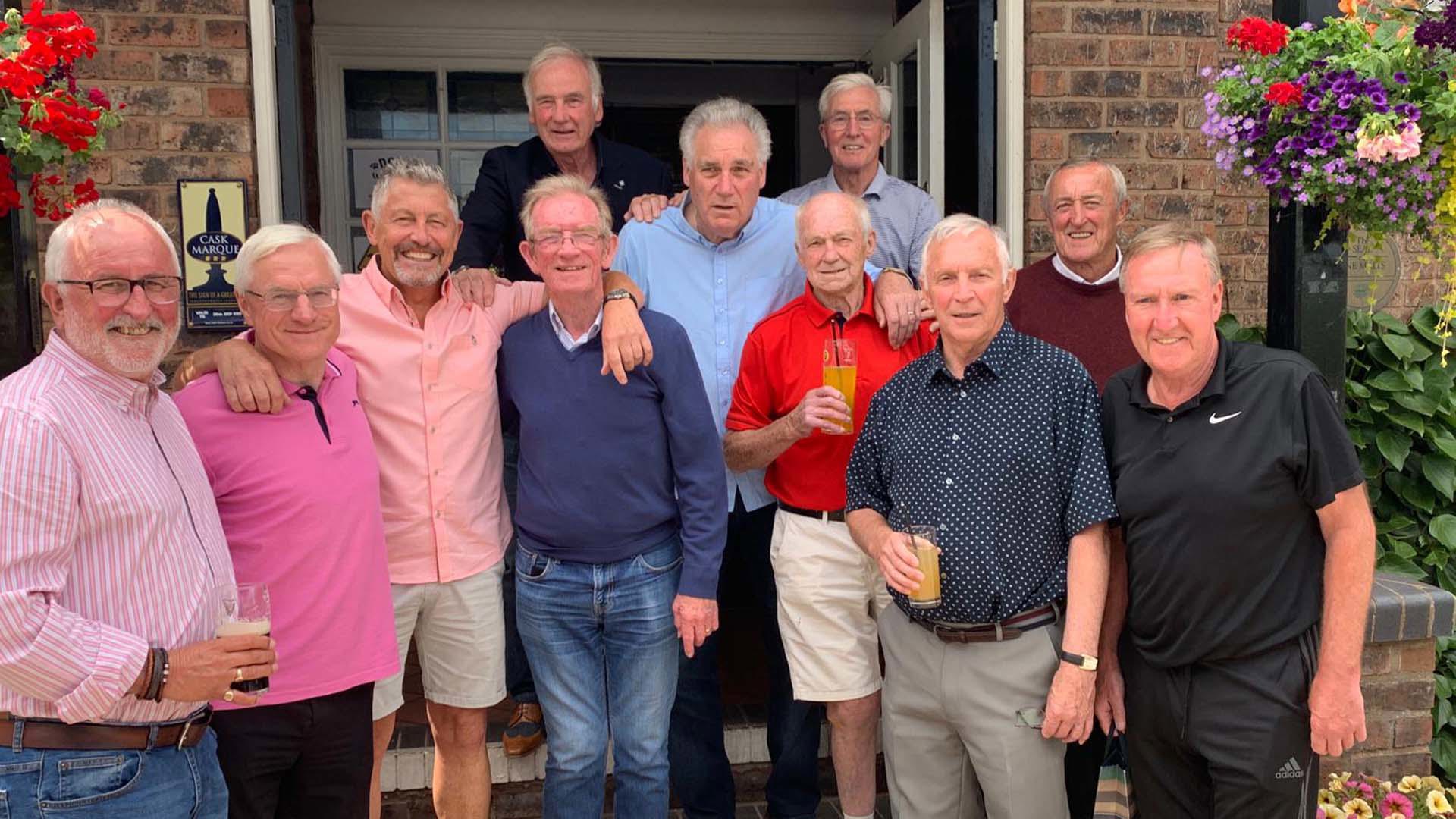
A young goalkeeper emerged whilst he was at Vancouver by the name of Bruce Grobbelaar. The ambitious understudy would not only learn from Parkes on the pitch but also helped him out off it, regularly babysitting for sons Greg and Dean. So, when, some 40 years later, Parkes was honoured by Wolves fans Steve Plant and Steve Saul at one of the ‘They Wore The Shirt’ dinners, Liverpool legend Grobbelaar made sure he was there.
Parkes was loved both by his teammates and the fans. His 75th birthday was marked with a wonderful turn-out of Wolves pals for lunch at the Fox at Shipley. Meetings of the Former Players’ Association featured plenty of merriment alongside the serious business. Relentless dressing room style banter with the likes of Daley, Geoff Palmer and administration manager Richard Green. An incredible amount of respect for John Richards, ‘Richie’, as Parkes called him. And when it came to the serious business, he was always there. Whether it was an annual dinner, the golf day, a community event, visiting a charity, he was regularly the first to arrive, and the last to leave.
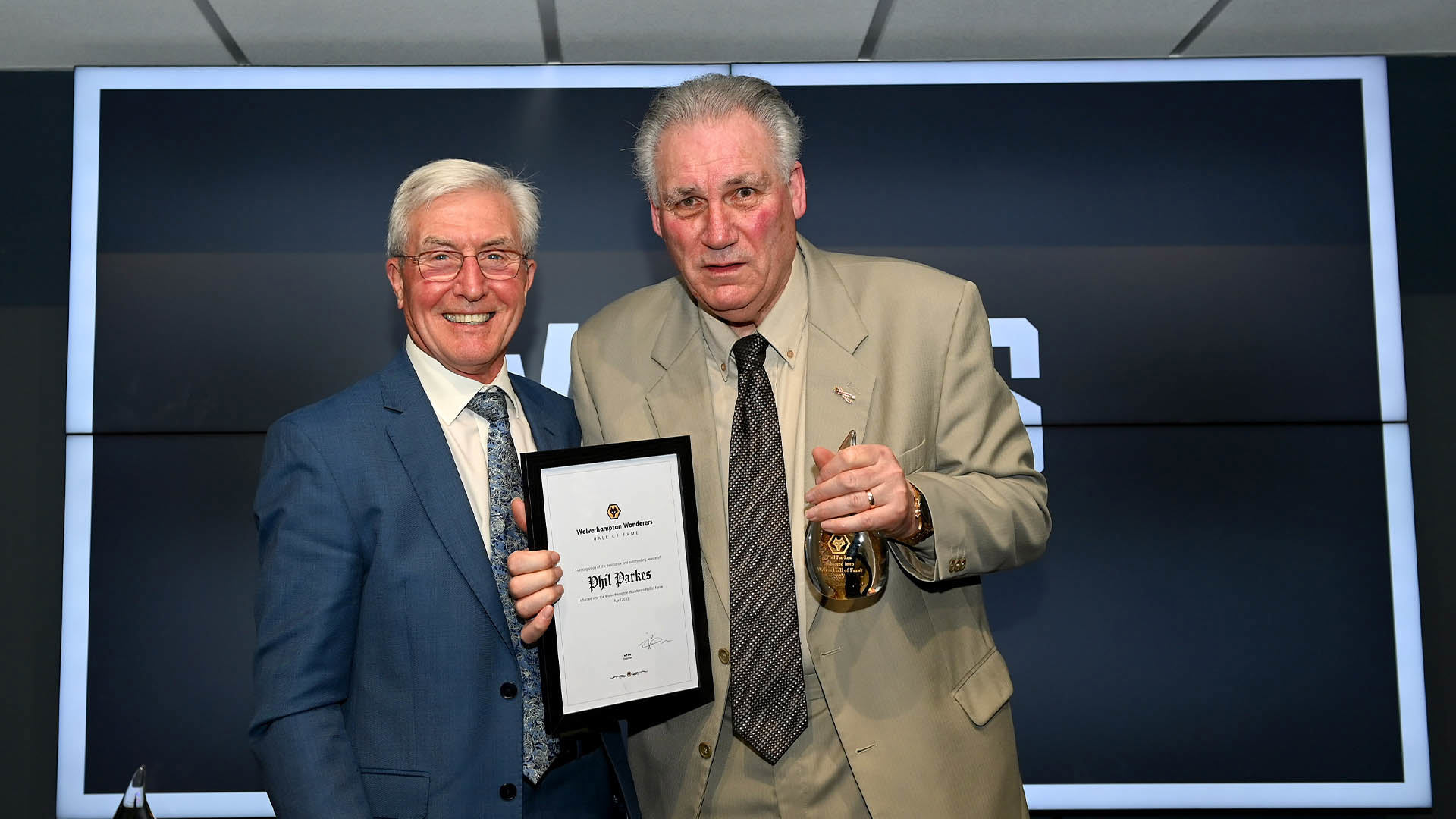
Three years ago, Parkes was a hugely popular inductee into Wolves’ Hall of Fame. How timely now and of considerable relief that he was able to be honoured, as he should be, on a magical night at Molineux. That he was able to see just what he meant to Wolves supporters and the people of the city. The fans continued to love him. Upon hearing of his awful accident nearly 18 months ago, they rallied around to raise funds which were there to be used to help his recovery. Sadly, that recovery has proved a bridge too far, even for a man with such a big character, and a big heart.
So, how will we all remember Phil Parkes? The footballer, and the personality.
As a very good goalkeeper, one of Wolves’ best and most loyal, who enjoyed an excellent career, including a wonderful swansong in the States playing alongside and against some of the game’s legends.
As a loving husband, father and grandfather. Who loved being with his family. As a fiercely steadfast friend. An inspiration with his relentless fundraising. And always, without fail, a warm and entertaining presence. Even if you didn’t know Phil Parkes, if you had never met him before, he would quickly put you at ease. He was effortlessly good company, full of joie de vivre with stories and anecdotes to crack a smile from even the hardest of souls.
There were times when organising Wolves FPA events that he and Daley would visit Molineux and march through the different offices in the corridors behind the scenes. Delivering tales of the past with a comic timing and understanding akin to some of the great comedy duos of any era. “Remember when you made that brilliant save against Spurs in the UEFA Cup Final,” Daley would say. “When Martin Chivers’ shot came off the crossbar and you saved the follow-up from Ralph Coates?” “Brilliant save?” Parkes would question in reply. “I was still diving for the first one.”
Daley and Parkes were wonderfully close. Off they would go, tittering away, like a pair of walking hurricanes, leaving a blissful trail of joy and hilarity in their wake. And tears of laughter. Happy tears. Which have now become sad.
So yes, many goalkeepers may be a little bit mad, a little bit eccentric. But goalkeepers, when they are like Phil Parkes, are also very special.
They well and truly broke the mould with Lofty. And the Wolves’ family is a far less happy and vibrant one without him.
Rest easy, big man.
Words | Paul Berry


