There are some players whose contribution to a football club is measured in appearances, goals or trophies. Then there are others whose impact stretch far beyond tangible outcomes.
As Wolves celebrate 150 years of history this season, it is impossible to tell the tales of some of the club's iconic players without first telling the story of the man who helped change Wolves forever for Black players: Don Gardner.
Long before diversity and inclusion became part of football's everyday conversation, Gardner was breaking new ground at Molineux.
The first Black player to represent Wolves.
For Gardner, the challenge of pulling on the famous gold and black shirt in the 1970s was not just about standing out as one of the best footballers of his peers, but he also had to navigate societal difficulties that many young players today can scarcely imagine.
Growing up in Edgbaston during the late 1950s and 1960s, football was always at the centre of his world and consumed every spare moment.
“Football was everything,” Gardner told wolves.co.uk. “Back then, that was what life was about for me.”
Black History Month, taking place throughout October, sees the club recognise the Black players who helped pave the way for others to follow in their footsteps.
Gardner’s story is not just one about barriers being broken and history being made, but about one man’s resilience, passion and a lifelong love of the game that carried him through an era where the odds were stacked against him.
Sitting opposite him at a pub in the heart of Wolverhampton earlier this month, a wide smile broke onto Gardner’s face when he reminisced about his life.
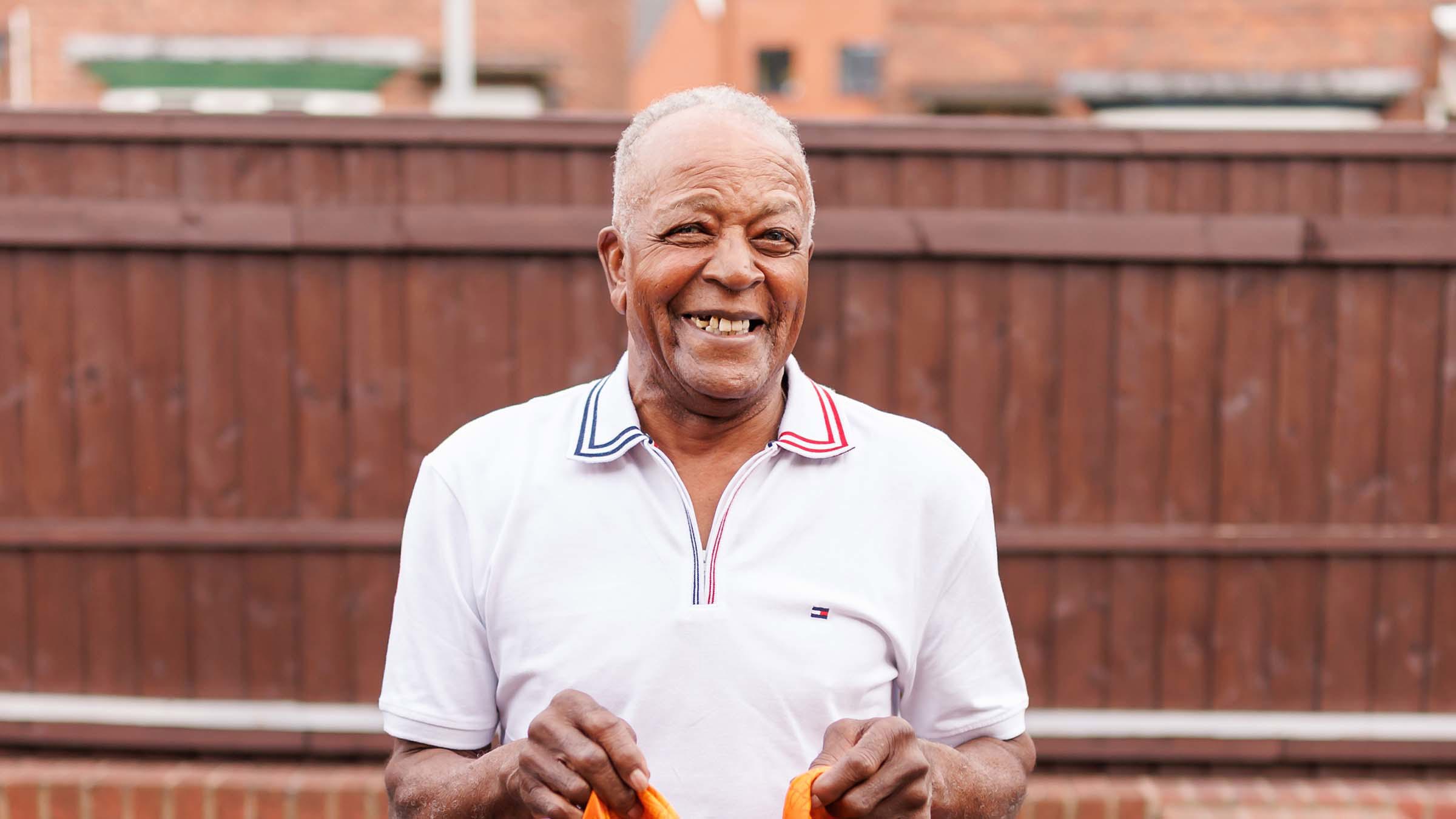
“I had a very good childhood, actually,” he said. “I grew up in Edgbaston, went to a very good school and my parents had a supermarket.
“Things were enjoyable and I really loved my childhood. Looking back, it was very, very good.”
But whenever he remembers those years, the conversation inevitably comes back to football.
It was there in the streets, in the local parks, before school, after school. Football was everywhere.
Nowadays, children might need dragging out of bed to be on time for school. Gardner and his friends couldn’t get there quickly enough because every extra minute meant another kick of a football.
“I remember getting to school at eight o'clock in the morning just so I could get picked for the team before lessons started.
“It was all about football all the time.”
That love soon became a potential career.
Playing for Portland Road School – now known as George Dixon Academy – led to a spot with Birmingham Boys. After that he represented the midlands and eventually a chance came with England Schoolboys.
The young lad who spent his mornings playing football before class was now attracting attention from some of the country’s biggest clubs.
“Once I got to that level, the scouts were everywhere. Aston Villa wanted to sign me, Birmingham City wanted to sign me, and there were clubs like Arsenal and Everton interested as well.
“It was a tough decision to make at the time, because I didn’t really want to stay too close to home. I wanted to spread my wings a little bit away from Birmingham, but I felt London and Liverpool were too far, because I’m still a Brummie.”
Despite interest from across the country, two clubs fit the bill for Gardner – Wolves and Coventry City. Both away from Birmingham, but still within touching distance of his Edgbaston home.
“I went to Coventry first, but I didn’t really like it there. I just didn’t feel it was the club for me, but then I came up to Wolves and I really liked it.
“Wolves were doing very well at the time and it was exciting joining a club that was competing high up in the First Division.
“When I arrived, I thought, ‘Wow, this is fantastic’. I loved everything about the club, including the colours. The old gold and black kit really appealed to me. There was just something about Wolves that attracted me.”
Gardner discovered the feeling of belonging at Molineux and it was the start of a relationship that would secure his place in club history forever.
Today, he is recognised as Wolves’ inaugural Black first-team player. A hugely significant milestone in Old Gold history.
Yet talking to him about what it meant to be a trailblazer and he modestly shrugs it off. But asking him about what it felt like to have the ball at his feet on the Molineux turf more than five decades later and his eyes still light up.
There was no sense of him trying to become a symbol. No ambition to make history. No awareness that 50 years later people would still be talking about his contribution.
The impact he made was enormous, but his motivation was beautifully simple – he just wanted to play football.
“To be honest, I never really thought about it in those terms. I wanted to score goals and do well.
“I never looked at it through the lens of colour. I didn’t think of myself as a Black footballer, I thought of myself as a footballer who wanted to succeed. That’s really how I approached the game.
“Although I never thought about it at Wolves, I was more aware of it during my England Schoolboys days.
“I remember there being discussions at the time about me potentially becoming the first Black player to play for England and that created a bit of attention, but it was never something I thought about.”
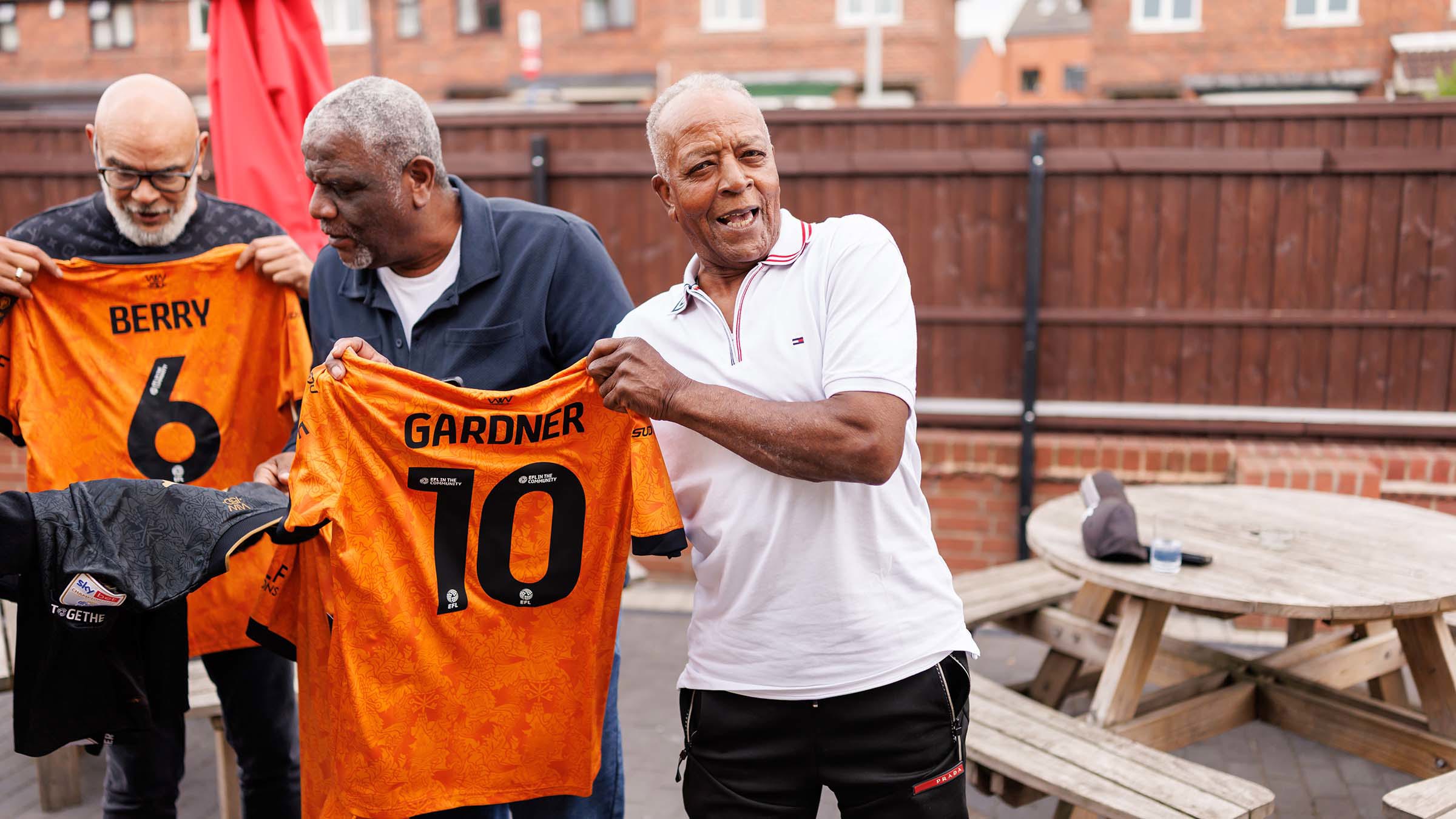
Now 71, Gardner has an excitable and overwhelmingly positive personality. He could not be happier to spend time regaling tales of what it was like in the reserves at Molineux and behind the scenes at the club in the golden 1970s era.
But one story in particular still makes him sound like a starstruck schoolboy.
Getting the opportunity to undergo trials and training sessions with England Schoolboys for the first time is going to be a nerve-racking proposition for any young footballer, but when Gardner realised who was watching him play, it gave him even more motivation to prove why he belonged with the best young talent in the country.
“I remember going for the England Schoolboys trials and it was a huge moment. Suddenly you've got the Three Lions kit arriving through your front door and you’re thinking, ‘I can’t believe it. England want me’.
“The trials were at Manchester United’s training ground and I’ll never forget scoring a fantastic goal from about 30 yards. Right into the top corner.
“Then I turn around and see people like George Best and Bobby Charlton watching on the sidelines. As a young lad, they were my heroes. I couldn’t believe it when they were there and I was so excited to meet them.
“Coincidentally, the next time I met George Best was years later when I was playing in America with the Portland Timbers and we played against his team, the California Surf. I don’t think he remembered me though!”
After trying to earn a place with England Schoolboys, Gardner’s next task was to secure a spot in the Wolves senior squad.
He was scoring goals for fun in attack for youth and reserve sides and was set a challenge by manager Bill McGarry which helped him earn that illusive first-team start which would put his name in the history books.
“It all started because I was doing really well in the reserves. I think I’d scored something like three hat-tricks in one season.
“Then one day at Castlecroft, Bill McGarry came down to training and asked me if I was going to score another hat-trick.
“I told him, ‘Yes, boss’, and he said to me, ‘If you score a hat-trick in your next match, I’ll give you a fiver.’ Well, I went out and scored the hat-trick.
“The next day in training, all the lads in the dressing room kept winding me up, saying, ‘Go and get your favour from the boss’. But I really didn’t want to ask him because everyone knows what Bill McGarry was like. He could be quite intimidating, but eventually they talked me into it.
“I knocked on his office door and went in and asked him for the fiver. I don’t remember his exact reply, but I do know that he wasn’t very pleased!
“Although he might not have given me the money, not long after, I got my chance in the first-team and made my debut.
“That’s always been a great memory for me.”
History was made on Bank Holiday Monday, 31st March 1975. Wolves hosted Luton Town at Molineux and were 3-2 up at half-time thanks to goals from Willie Carr and a Kenny Hibbitt brace, and during the second period, Gardner was brought on to replace Steve Kindon.
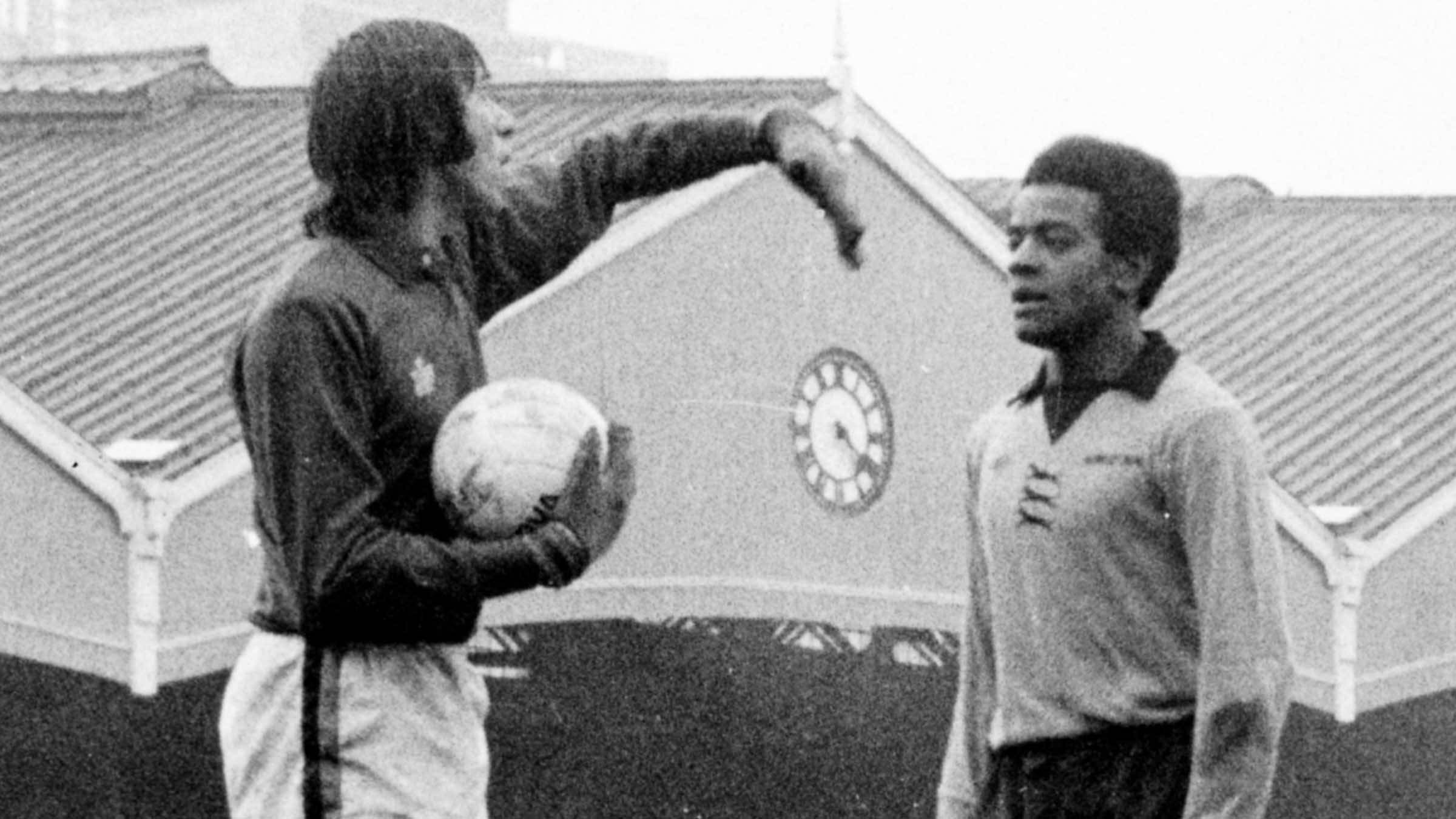
Although he didn’t score – Hibbitt completed his hat-trick before Peter Withe added a fifth in a 5-2 victory – Gardner performed well enough to be given a first start in gold and black away at Queens Park Rangers five days later.
The third and final of his Wolves matches arrived away at Derby County. Both of those games saw the Old Gold fail to score in successive defeats.
And while first-team football brought excitement, as well as an opportunity to achieve a lifelong dream, it also exposed Gardner to the ugly realities faced by many Black players during the 1970s.
When asked whether he experienced racism during his career, his answer is immediate and came without hesitation.
“All the time.”
The abuse he and fellow Black players faced could be relentless, but worse than that, it was normalised.
For many Black footballers of Gardner's generation, racism was simply another thing to navigate alongside the challenges of professional football.
Yet what stands out about Gardner is his absence of bitterness. Maybe that’s because of the positive personality he possesses. He remembers it, he acknowledges it, but he refuses to let it define his story.
“It was just something you had to deal with in those days. You’d hear comments from the crowd, especially at certain grounds. Queens Park Rangers was one place where it could be quite intense because the supporters were so close to the pitch.
“You’d be taking a throw-in and people would shout things at you from a few feet away. There were occasions when players like Brendon Batson and others had bananas thrown onto the pitch and there were monkey chants. That happened regularly in football during that era.
“You’d also get abuse from opposition players. But often they were doing it because they wanted to get you off your game. Then after the match those same players would come over and shake your hand and ask how you were.
“It doesn’t excuse it, but football was different then.”
But if anything, the abuse gave him even greater determination. He loved football too much to stop, so when faced with animosity, he responded with courage.
“When people were trying to put you off, it made you want to prove them wrong. It gave you extra determination.
“The harder they made it for you, the more you wanted to show what you could do.”
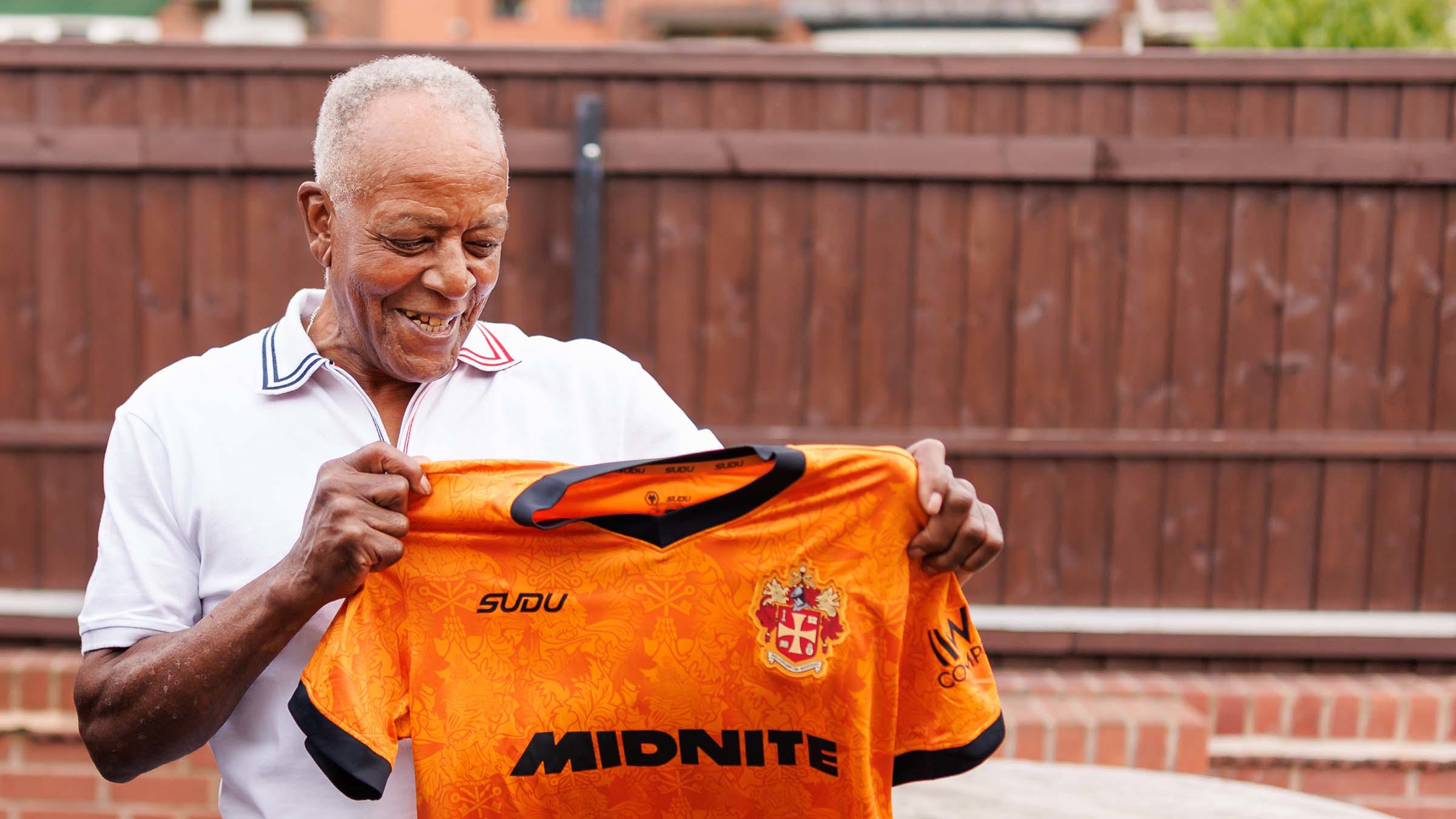
Unfortunately for Gardner, he was not able to make Molineux his forever home. Following his three outings for Wolves, his contract came to an end at the conclusion of the 1974/75 season, and his career took him over to the United States.
However, injuries and fitness problems playing on America’s Astroturf pitches, coupled with his parents being unwell, saw him return to the UK, where he became disillusioned with the game he had so loved.
But now when Gardner returns to Wolverhampton, he sees reminders of his journey all around the stadium. Supporters stop him to ask for photographs, stories are shared, memories are recalled, and that smile returns to his face as he reflects on the legacy he left at the club.
Then there are the banners. Put up on the roads and paths around Molineux to mark the 150th anniversary featuring some of the iconic moments and people who shaped the football club over the last century and a half.
“Have you seen the flags around the stadium?” he laughs. “I’m on one of them. My family are absolutely delighted about that.
“When you walk up to Molineux and see those displays, there’s nothing better.”
Although he might have only played three times for Wolves, never scored a goal, never lifted a trophy, Don Gardner did something even more incredible. He created the path at Molineux for Black players to follow.
“To know you've played your part in the club's history and to be recognised like that is an amazing feeling.
“What all of the players who are up there on those banners achieved for Wolves, regardless of the colour of their skin, and how they’ve progressed the club is wonderful to see.
“For people like myself, Don Hazell and George Berry, we stood our ground, fought through difficult periods and came out the other side, and that’s important too.
“Fortunately, the game has moved forward enormously and it’s great to see people recognised for what they contributed.
“I’m seriously proud, very proud, to have played my small part.”


