‘A home like no other: The story of Molineux’ by club historian, Pete Crump
Home to generations of Wolves supporters, Molineux has witnessed the club’s greatest triumphs and most dramatic nights.
Its distinctive character makes it one of the most unique stadiums in the history of the game, and as we celebrate our 150th anniversary, let’s take a look back over what makes Molineux so special.
This is part 2 of the series on Molineux. To read part 1, focusing on how the stadium first became Wolves’ home and the early developments of the ground, please click here.
The late 70s redevelopment
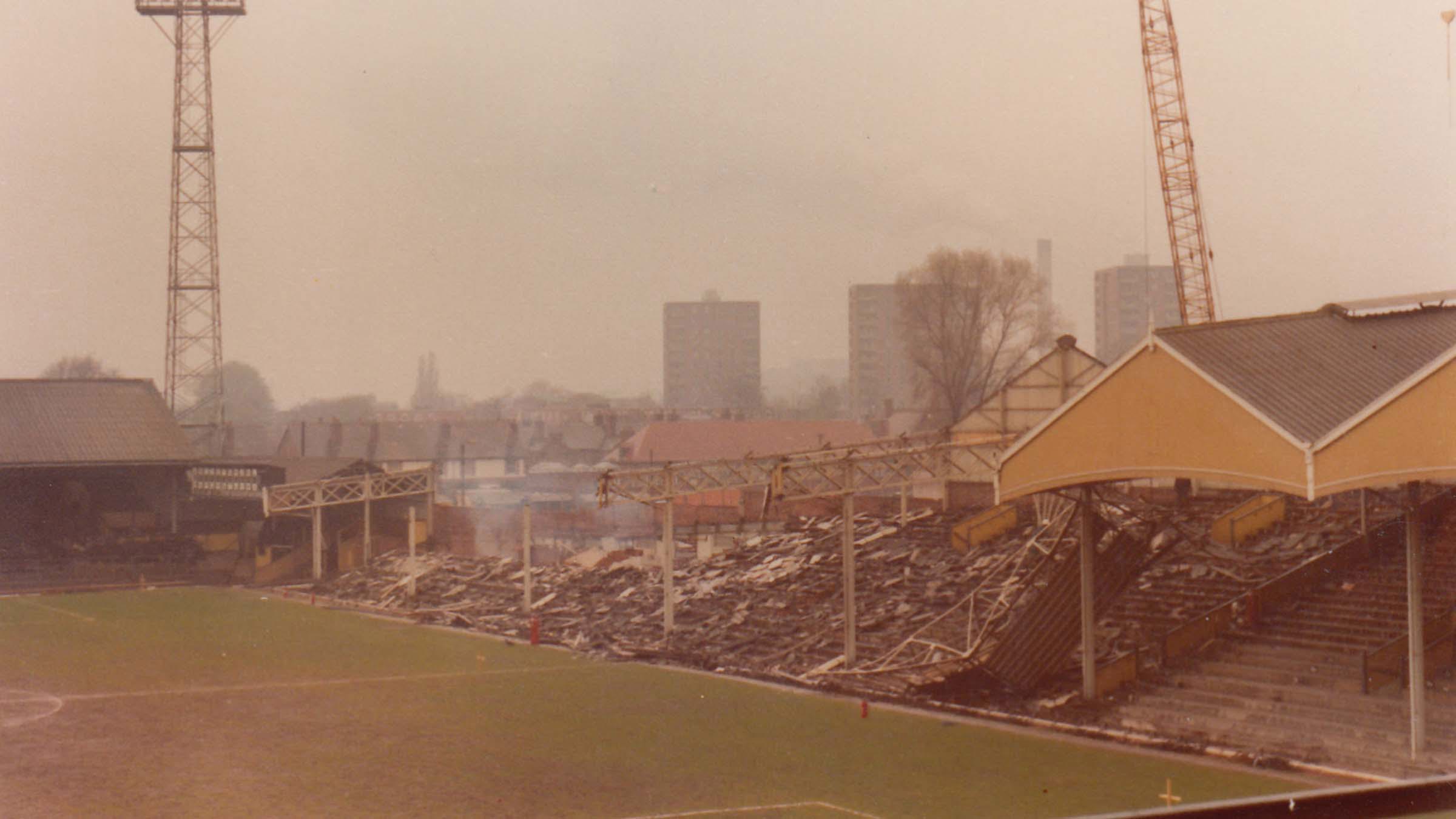
The Safety of Sports Grounds legislation effectively placed the old Molineux Street Stand on borrowed time, although the stand which had been in place since 1932 was given a temporary reprieve while Wolves prepared a replacement.
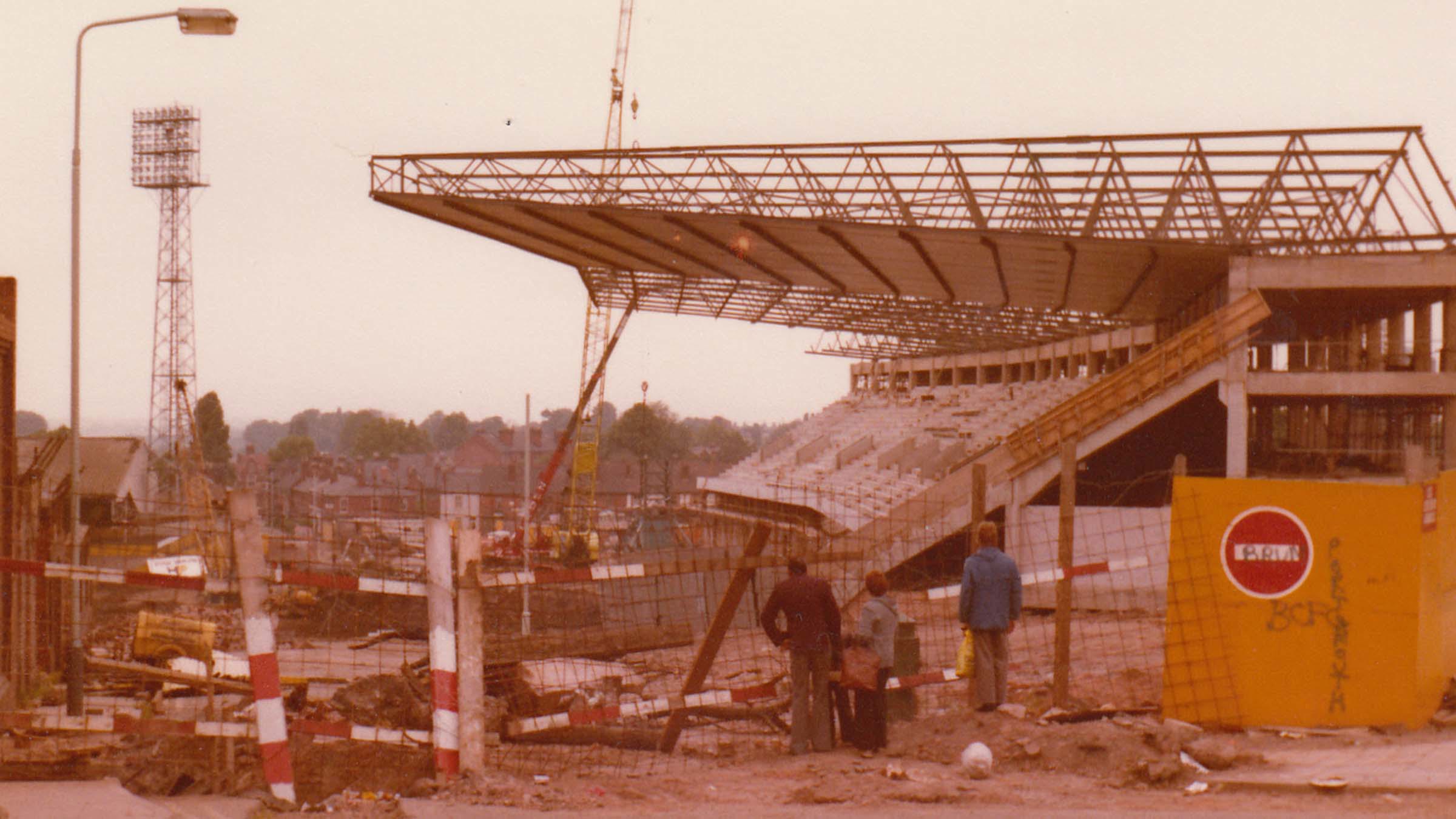
Work began during the 1977/78 season on a new stand behind the existing structure. To create the necessary space, the club purchased and demolished 71 terraced houses before the old Molineux Street Stand was finally demolished in 1979, and the new stand opening that summer.
Wolves had initially been due to face Liverpool on 18th August 1979, but the match was postponed to allow more time for the construction work. It was eventually played on 26th February 1980, with Wolves winning 1-0 and captain Emlyn Hughes appearing on ‘This is Your Life’.
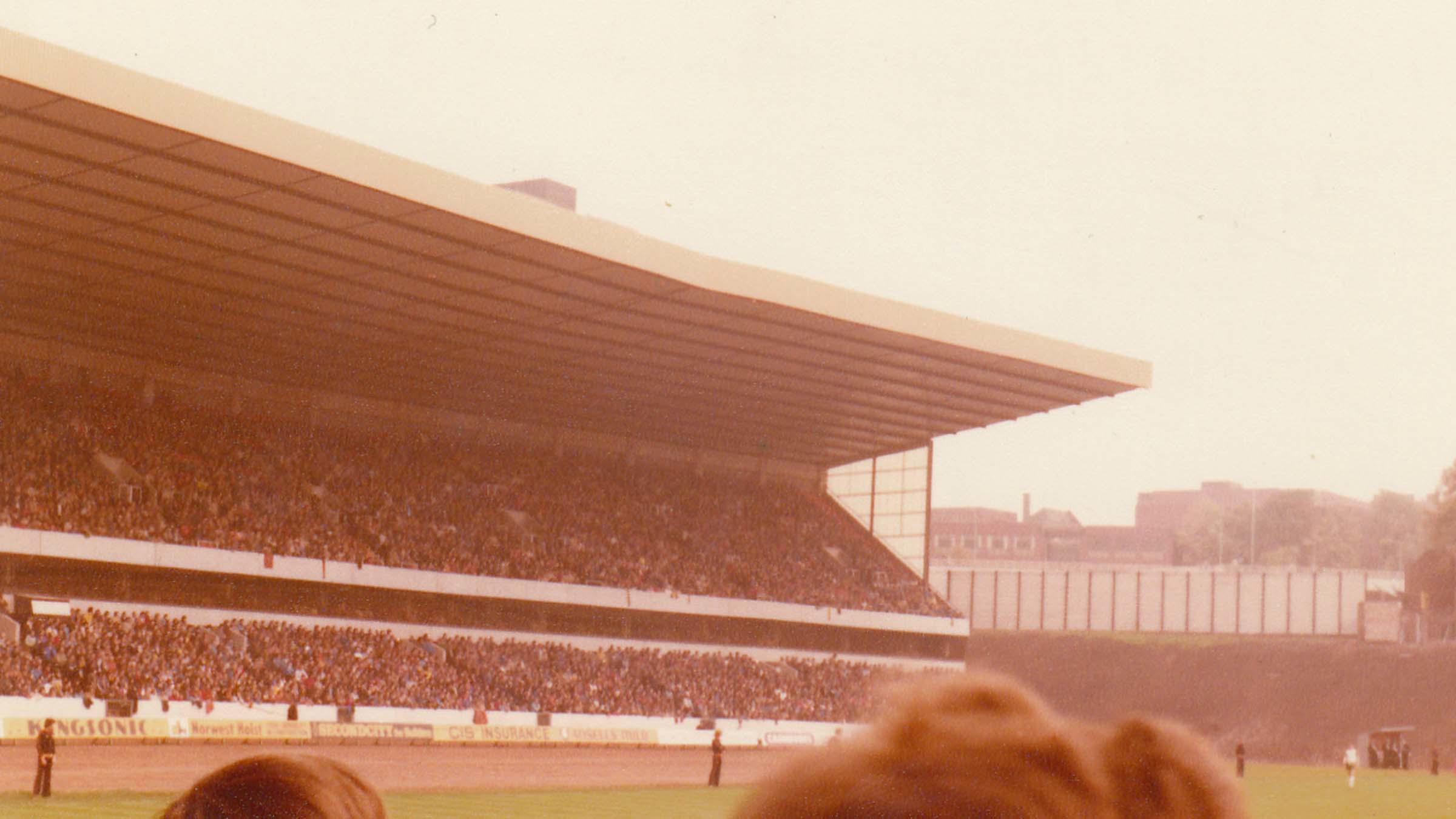
The new stand was officially opened on 25th August 1979, when Wolves defeated Ipswich Town 3-0. Willie Carr, Peter Daniel and Mel Eves scored, with Carr becoming the first player to score in front of the new stand.
The stand held approximately 9,500 supporters and contained 42 executive boxes and cost just under £2.5 million – although the seats were originally red.
The opening was largely a success, although there were some minor problems with the turnstiles. Ipswich manager Sir Bobby Robson toured the stand and praised it as a “very fine stand”, particularly the executive boxes.
The opening coincided with a remarkable period in the transfer market. Steve Daley was sold to Manchester City for £1,437,500 on 5th September 1979, before Andy Gray arrived from Aston Villa for £1,469,000 three days later. Wolves therefore set a British transfer record with Daley and then broke their own record almost immediately.
Gray signed on the pitch before the Crystal Palace home game using club secretary Phil Shaw’s Parker pen. The same pen was later used when Bryan Robson signed for Manchester United in October 1981.
Despite the excitement surrounding the new stand, Wolves were about to enter a difficult period.
The new structure had left a large gap on one side of the stadium as the stadium footprint had deliberately been moved away from Waterloo Road to allow room for the future redevelopment of the Waterloo Road Stand (now known as the Billy Wright Stand).
There was even speculation that the gap might have made the stadium less intimidating for visiting teams and Wolves’ 1979/80 results offered some evidence to support the theory. Although Wolves finished sixth and won the League Cup, out of the 19 matches won in total that season, more of them came away from Molineux.
The demolition of the old Molineux Street Stand also meant the famous clock disappeared, and it would not return until 1992.
A new vision for Molineux
Harry Marshall had been a Wolves director from 1965 before becoming chairman in 1976. His father, Jim Marshall, had also served the club for decades, attending every AGM from 1923 until his death in 1971, and Marshall junior had ambitious plans for Molineux.
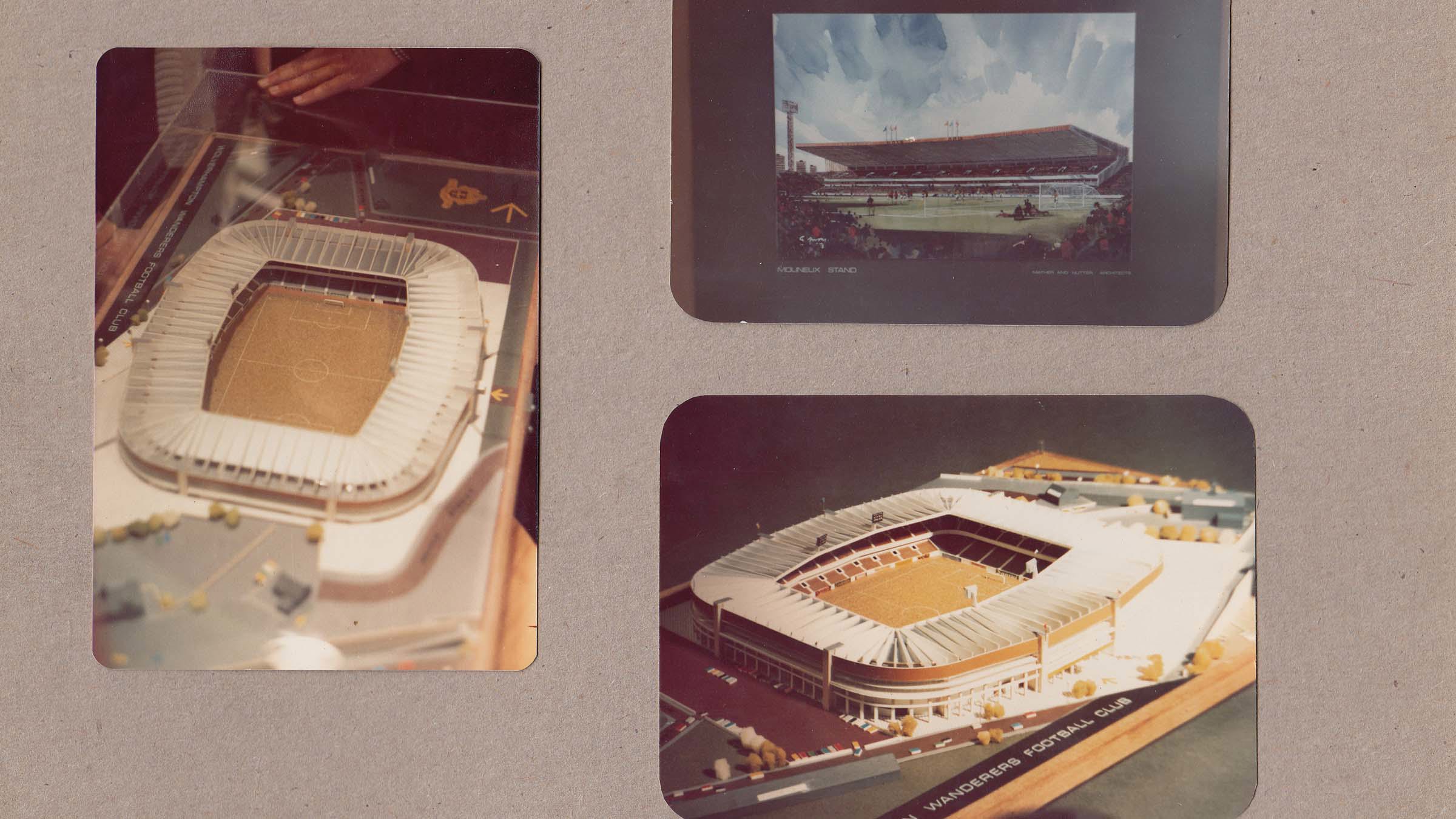
The new stand had been necessary because of safety legislation, but Marshall wanted the redevelopment to go much further. Programme notes from the late 1970s and early 1980s reveal his ambition to make Molineux one of the finest stadiums in the country.
For the Bristol City match on 12th January 1980, Marshall described his aim as creating “the finest stadium in the land”, and in August that year, he spoke again of wanting Wolves to recapture their glory years while turning Molineux into “the finest stadium in the country”.
Wolves press officer Terry Bond also travelled to the United States around this period to examine stadiums, including the home of the New York Cosmos, and although the South Bank was supposed to be the next stage of the redevelopment, it never happened.
However, in the early 1980s, Wolves began struggling financially, with reports attributing some of the problems to the loan taken out with Lloyds for the Molineux Street Stand. Interest rates rose sharply, particularly around 1982, and some supporters began referring to the new structure as “Marshall’s Folly”.
Protests against Marshall were also held in January 1982 before the Sunderland match.
On 8th June 1982, an Extraordinary General Meeting was called to remove Marshall and vice-chairman Wilf Sproson. They survived the vote but resigned the following week.
Marshall had also come close to persuading Alex Ferguson to become Wolves manager in January 1982. Ferguson would potentially have succeeded John Barnwell, but Ian Greaves ultimately took the job.
Despite the controversy, Marshall’s service to Wolves should not be forgotten. He had spent 17 years as a director, while his father had given approximately 60 years to the club between them. Harry remained a supporter and continued attending Wolves matches until his death in September 2010. Both Harry and Jim were Wolves through and through.
The problems of the early 1980s were also part of a wider crisis affecting English football. Commercial revenues were falling, stadium facilities were deteriorating, the economic climate was difficult and hooliganism was becoming increasingly severe, meaning Wolves were far from alone in suffering.
Renaming the Molineux Street Stand
Following Wolves’ financial rescue in 1982, the club structure changed. Wolverhampton Wanderers Football Club (1923) Ltd was replaced by Wolverhampton Wanderers Football Club (1982) Ltd, and although there was little major redevelopment at Molineux during the first part of the decade, the Molineux Street Stand received a new name.
John Ireland had served Wolves as a director from 1955 to 1977, becoming vice-chairman in 1962 and chairman in 1964. His association with the club stretched back even further; he had been a supporter and had helped clean players’ boots. Ireland returned as club president in 1982.
In January 1983, it was announced that the new stand would be renamed the John Ireland Stand. It became the first Wolves stand to be named after an individual from the club’s history.
The official renaming took place in April 1983, with a commemorative plaque installed in the executive box area.
Ireland remained president until his death in 1984, and while he is most remembered for the decision to sack Stan Cullis in 1964, his wider contribution to Wolves was considerable.
The stand retained John Ireland’s name until 2003 when it was renamed in honour of the club’s legendary goalscorer Steve Bull.
The 56 and the Popplewell Inquiry
The events at Valley Parade in 1985 had a massive impact on football stadiums across Britain, but especially Molineux.
On 11th May 1985, Bradford City hosted Lincoln City and were celebrating winning the Division Three title. The match began at 3.04pm following the trophy celebrations, but at 3.44pm, a fire broke out.
Fifty-four Bradford supporters and two Lincoln City supporters lost their lives on that tragic afternoon, while many more suffered horrific physical and psychological injuries.
Following that incident, the Popplewell Inquiry opened in May 1985. Its recommendations had a direct impact on Molineux, particularly the decision to ban new wooden grandstands and immediately close any existing wooden stands considered unsafe.
When Wolves returned to Molineux for the first match of the 1985/86 season against Newport County on 24th August, the stadium had effectively become a two-sided ground.
The North Bank and Waterloo Road Stand were condemned, closed and never reopened.
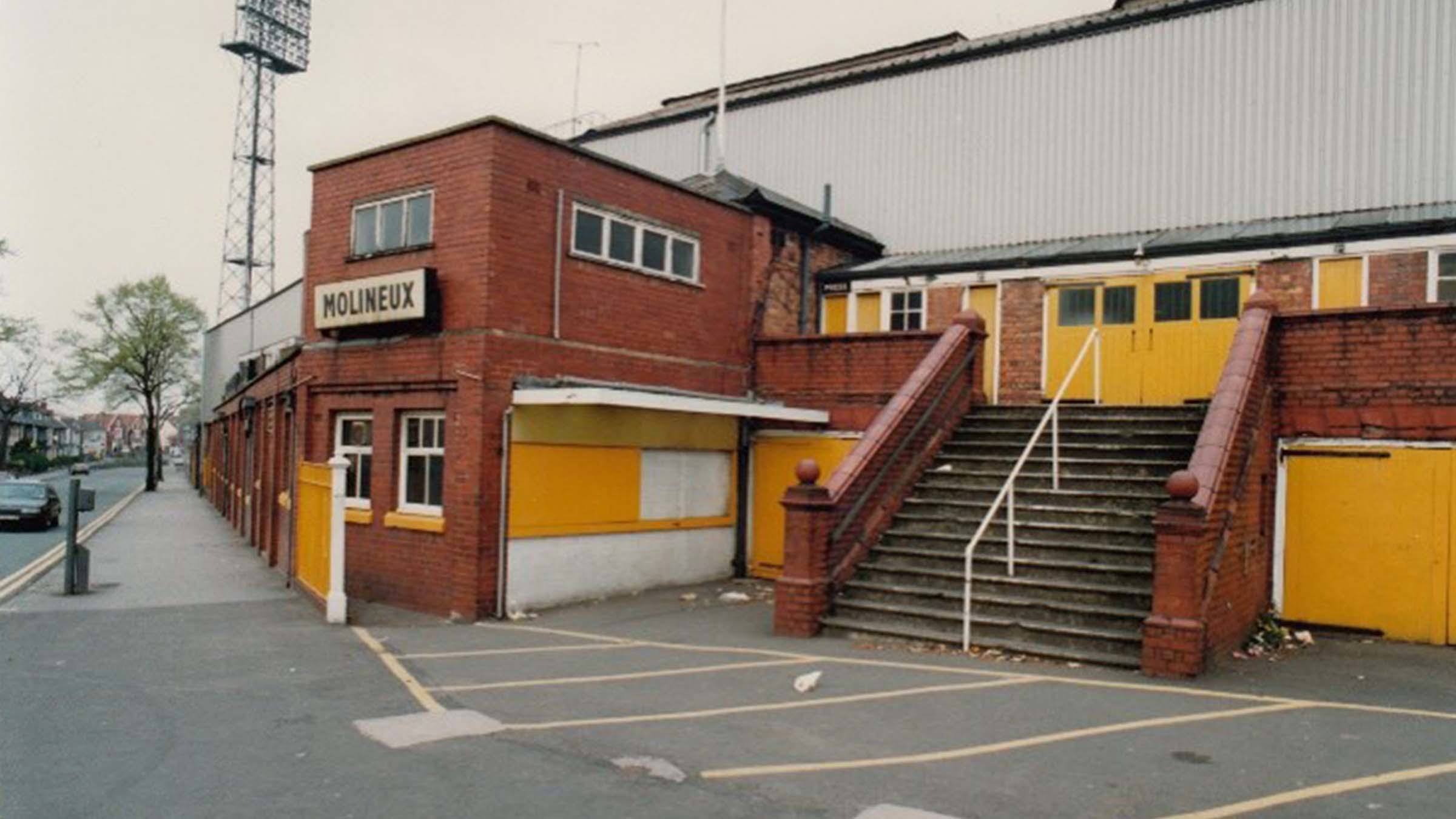
Wolves did not suffer the loss of life experienced by Bradford and Lincoln. We might have lost two stands, but those two clubs lost supporters.
However, the dangers of wooden stands had been evident even before Bradford. Nottingham Forest’s main stand had seen a serious fire in 1968, while Norwich City’s Carrow Road suffered a fire in 1984. At the time of the Bradford disaster, Simon Ingliss –architectural historian and author who has penned several books on football stadiums – had also highlighted concerns about the accumulation of rubbish beneath the stand.
The Popplewell Inquiry’s final report was published in January 1986, and its recommendation regarding wooden stands permanently altered Molineux.
The North Bank and Waterloo Road Stands had both been used for the final time on 6th May 1985, although the closures also created difficulties for disabled supporters, many of whom had previously been accommodated in the Waterloo Road Stand.
Architecturally, Molineux remained largely unchanged from 1985 to 1989, but the stadium’s deterioration coincided with Wolves’ collapse down the football pyramid. Between 1984 and 1986, Wolves suffered three successive relegations, falling from Division One to Division Four.
Molineux was very nearly reduced to a single usable stand, as the South Bank only narrowly survived the safety requirements.
There had been one change to Molineux in the late 1980s. In the summer of 1987, a steel fence was erected to prevent supporters gaining access to the pitch. We believe this came about after some issues with pitch invasions at the final regular game of the 1986/87 season against Hartlepool at Molineux, prior to Wolves participation in the first play-offs.
Hillsborough and the Taylor Report
The tragedy at Heysel in May 1985 had also added to the sense that football grounds needed fundamental change, and then four years later, Hillsborough provided another devastating warning.
On 15th April 1989, the FA Cup semi-final between Liverpool and Nottingham Forest ended in tragedy when supporters were crushed at the Leppings Lane end. Ninety-five people died on the day, with further deaths later taking the eventual total to 97.
However, there had already been warning signs at Hillsborough. During the 1981 FA Cup semi-final between Wolves and Tottenham, a crowd surge occurred at the Leppings Lane end just four minutes into the match. Supporters were lifted out of the area, and one fan was carried around the pitch on a stretcher. There were 38 injuries that day, with eight supporters taken to hospital, including two broken arms and a broken leg.
Further problems occurred during the 1987 semi-final between Leeds United and Coventry City.
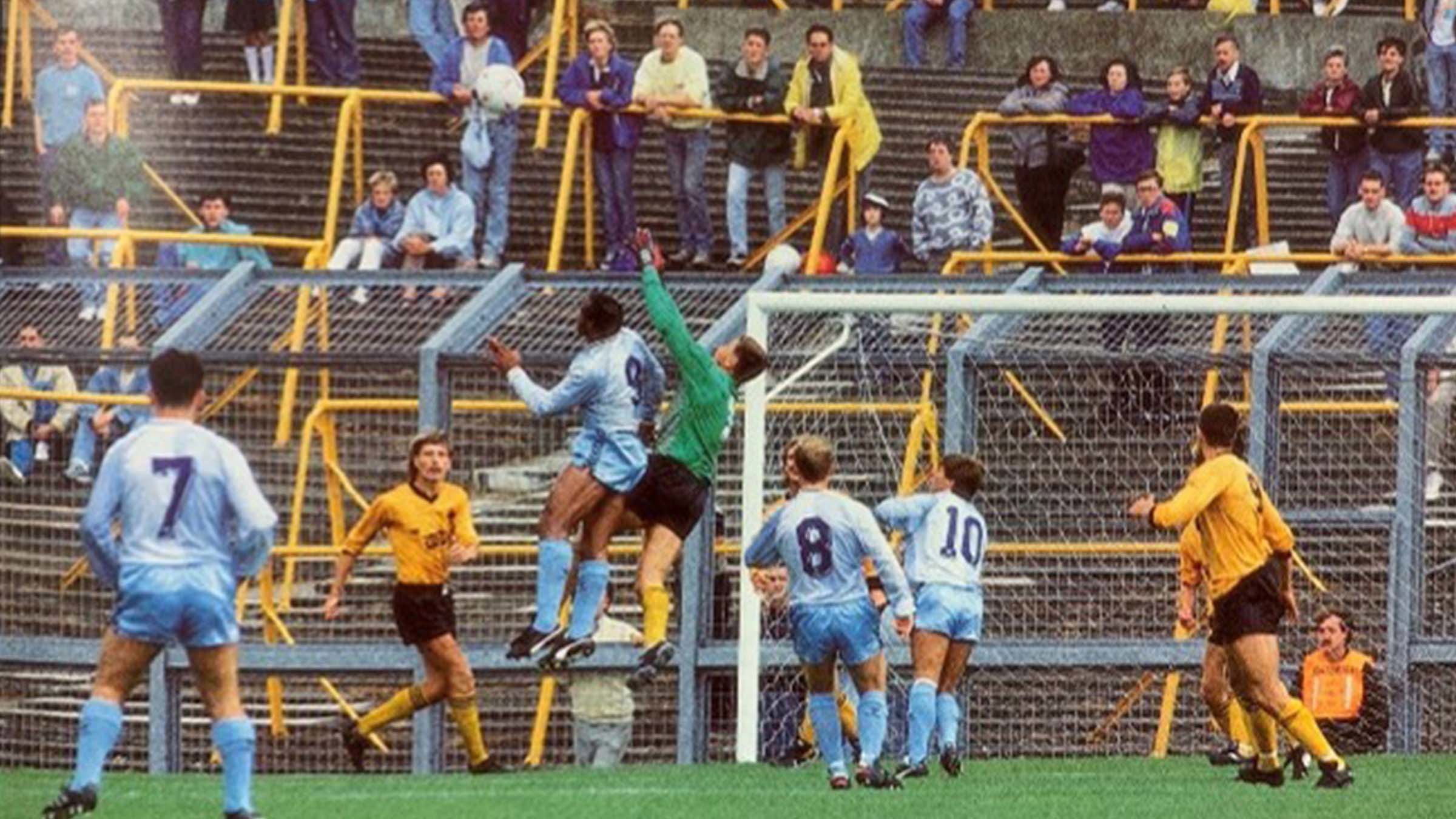
Following the Hillsborough disaster, the government commissioned the Taylor Report. Its interim findings were published in August 1989 and the final report in January 1990. Among its recommendations was a fundamental change to major football stadiums –they would have to become all-seater grounds, with a deadline of August 1994.
For Molineux, the implications were enormous. The North Bank and Waterloo Road Stand had already been closed for four years, and the Taylor Report meant the South Bank could only remain as a terrace for another four years, meaning after August 1994, only the John Ireland Stand would have remained usable.
Molineux needed to be rebuilt.
We’ll delve deeper into the recent history of Molineux during the next two weeks.
Wolves historian Pete Crump’s weekly articles reflecting on a range of topics from the club’s proud past will be available throughout the 150th anniversary season on wolves.co.uk.


